Which Omega 3 Fish Oils Are Actually Delivering the Benefits they Claim? We Tested 52 Different Brands to Find Out.
by Olivia L. Vaughn On February 27, 2024
Olivia is a beauty writer with 8 years of experience, specializing in skincare and anti-aging. She’s passionate about offering honest, science-backed advice for youthful, glowing skin.
Omega-3 Research Shows Support for Joint Health, Inflammation Balance, and Healthy Aging
- theHealthSearch.com
Omega-3 Research Shows Support for Joint Health, Inflammation Balance, and Healthy Aging
- theHealthSearch.com
by Olivia L. Vaughn On February 27, 2024
Olivia is a beauty writer with 8 years of experience, specializing in skincare and anti-aging. She’s passionate about offering honest, science-backed advice for youthful, glowing skin.
Most people don’t realize how little EPA and DHA they may actually be getting from a fish oil supplement. Front labels often emphasize total fish oil, even though only part of that amount comes from the omega-3 fatty acids most often studied in humans. That can make two products with similar-looking labels very different in practice. So our review started with a simpler question: how much EPA + DHA does each softgel really provide and how many are needed?
Omega-3s have been studied for heart, brain, eye and joint health, but the amount you take matters. The easiest place to start is the Supplement Facts panel: look at the EPA and DHA listed per serving, then check how many softgels are required to reach that amount. That can show exactly what each capsule actually provides.
How Much Omega-3 Benefits Are You Really Getting?
How Much Of Omega-3 Benefits Are You Really Getting from Fish Oil?
Not all fish oils deliver the same amount of EPA and DHA. Any bottle may advertise a large fish-oil number while providing much less EPA + DHA. For a useful comparison, we focused on the EPA and DHA listed per softgel rather than the biggest number on the front.
Serving size matters, too. Two products can show similar EPA + DHA totals while one needs a single softgel and another needs several. That changes what the label means, so we evaluated both the amount delivered per softgel, and capsules required daily.
For consumers, the goal isn’t to chase the biggest fish-oil number. It’s to know how much EPA + DHA each softgel provides, how many capsules you need, and whether the product is easy enough to take consistently.
Serving size matters, too. Two products can show similar EPA + DHA totals while one needs a single softgel and another needs several. That changes what the label means, so we evaluated both the amount delivered per softgel, and capsules required daily.
For consumers, the goal isn’t to chase the biggest fish-oil number. It’s to know how much EPA + DHA each softgel provides, how many capsules you need, and whether the product is easy enough to take consistently.
The amount of EPA + DHA was one of the clearest ways to compare products in our review. We used about 700 mg+ combined EPA + DHA per softgel as a useful concentration benchmark, not a clinical requirement. That made per-softgel concentration more useful to us than the biggest fish-oil number listed on the front label.
Serving size was another important factor. A strong EPA + DHA total can look impressive until you see that the listed amount requires several softgels. We compared how much EPA and DHA each softgel delivered, along with the number and size of capsules needed, because daily convenience can make a key difference in whether most people stay consistent.
Purity, sourcing, and everyday usability rounded out our review. A concentrated formula does not automatically make one product better than another, so we looked at where the fish oil came from, whether it was tested for contaminants, and how practical it was to take. The goal was a balanced view of potency, quality, transparency, and how each formula fits well into real life.
Fish Oils to Avoid
Low EPA + DHA Fish Oils
Some products feature a large total fish-oil number while delivering relatively little EPA and DHA. Always compare the actual omega-3 content per serving, not simply the milligrams of oil on the front label.
High-Mercury Fish Sources
Larger predatory fish can accumulate more mercury over their lifetime. Look for clearly identified, lower-mercury marine sources along with finished-product testing for heavy metals and contaminants.
Unclear or Hidden Serving Sizes
Watch for products that advertise an impressive omega-3 number that actually requires several softgels. Check both the EPA + DHA amount and how many capsules are needed to reach that serving.
Poorly Tested Fish Oils
Fish oil quality can vary between products. Look for testing that addresses potency, heavy metals, microbial contamination, and ideally oxidation rather than relying only on broad purity claims.
What to Look For in Omega-3 Fish Oils
Small Pelagic Fish
Anchovies and sardines sit low on the marine food chain and are naturally rich in EPA and DHA. They are also generally lower in mercury than larger predatory species, making them a practical starting source for quality fish oil.
Meaningful EPA + DHA
Look beyond the total amount of fish oil and compare how much EPA and DHA each serving actually provides. These are the long-chain omega-3 fatty acids used throughout most of the human research behind fish oil.
Third Party Testing
A well-known optimized curcumin form with published research focused on cognitive health, mood, memory, healthy aging, and oxidative stress. Most studies are centered around brain and wellness-related outcomes.
The studies below show why omega-3 research extends beyond heart health. Human trials have examined EPA and DHA across joint pain, mobility, inflammation, and recovery. While results vary by dose and population, the findings help explain why meaningful omega-3 intake remains an active area of clinical research.
Together, the evidence suggests omega-3 supplementation may support joint comfort and function, particularly when meaningful EPA + DHA amounts are used consistently.
Study 1: Kuszewski et al., 2020: In a 16-week randomized trial of 152 adults, fish oil significantly reduced overall chronic pain, pain scores, and osteoarthritis burden versus placebo. (Results shown in graph above.)
Study 2: Deng et al., 2023: A meta-analysis of 9 randomized trials involving 2,070 adults with osteoarthritis found that omega-3 supplementation significantly reduced arthritis pain and improved joint function versus controls.
Taken together, the human evidence suggests omega-3 supplementation may play a meaningful role in joint comfort, pain, and mobility. For our review, we prioritized products that clearly disclose EPA + DHA content and provide practical serving sizes, transparent sourcing, and credible quality testing alongside the clinical research.
Our Review Methodology
Our review methodology is grounded in evidence-based research, drawing on the latest peer-reviewed clinical studies and established health sources. We also evaluate product labels, ingredient transparency, available quality testing, and real-world usability to keep our reviews practical and research-led.
We combine clinical research with hands-on product analysis, considering potency, formulation, serving size, sourcing, testing, and overall user experience.
The Best Omega-3 Fish Oil Supplement 2026 Review
The Best Omega-3 Fish Oil Supplement Review Year of 2026
The following review is based on a structured evaluation of published clinical studies, EPA + DHA content, sourcing, purity testing, serving size, capsule usability, and overall product quality. Each supplement was reviewed for scientific support, transparency, formulation, and practical everyday use.
1
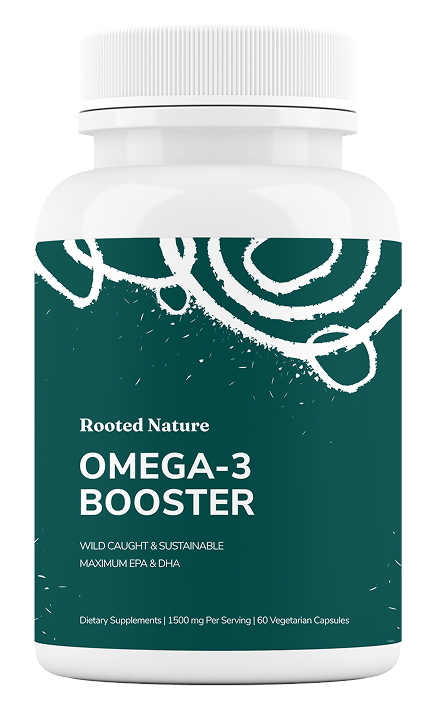
Omega-3 Booster
By Rooted Nature™
TOTAL RANKING
9.6/10
A+Overall Grade
A+Overall Grade
TOTAL RANKING
9.6/10
KEY INGREDIENTS INCLUDED
9.7/10
8.1 AVG.
CLINICAL EVIDENCE
9.8/10
8.1 AVG.
DOSAGE & FORMULATION
9.3/10
8.1 AVG.
INGREDIENT SAFETY
9.1/10
8.1 AVG.
Product Highlights
Delivers 720 mg of omega-3s per softgel, including 432 mg EPA + 288 mg DHA, for concentrated daily support.
Supports joint comfort, mobility, and a healthy inflammatory response — areas repeatedly studied in human omega-3 research.
Supports cardiovascular and brain health with meaningful amounts of the long-chain omega-3s EPA and DHA.
Made from anchovies, a small pelagic fish source naturally lower in mercury than many larger predatory fish.
Compact softgel with substantial EPA + DHA and natural lemon flavor for easier daily use.
Third-party tested for potency, heavy metals, and microbes.
The Bottom Line
Omega-3 Booster™ by Rooted Nature™ stood out in our review for combining concentrated EPA + DHA with a compact daily softgel, anchovy sourcing, and independent quality testing. Rather than relying on a large total fish-oil number, the formula puts the focus on the omega-3 amounts consumers can compare with ease.
Each softgel provides 432 mg EPA + 288 mg DHA, for 720 mg of total omega-3s in a 1,200 mg fish-oil serving. That concentration gives consumers a clearer way to compare potency without needing several capsules. The anchovy source also offers a small-pelagic fish option that is generally lower in mercury than larger predatory fish.
The formula is also built for daily use: a compact softgel, natural lemon flavor, and third-party testing for EPA/DHA potency, heavy metals, and microbiological quality. Together, those details support a practical balance of potency and usability.
KEY INGREDIENTS YOU WANT TO LOOK FOR:
WHAT TO LOOK FOR IN OMEGA-3 FISH OIL SUPPLEMENTS:
High EPA DHA
Third-Party Tested
Small Pellagic Fish
Compact Soft-Gel
*TheHealthSearch rankings reflect our review criteria and are provided for informational purposes only. Individual results may vary, and product details are subject to change. Please visit the product website for full details.
Supports heart, brain, and overall health with concentrated omega-3s.
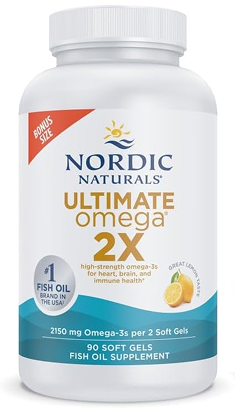
Made from wild-caught fish, with a focus on sustainable sourcing and quality.
Provides broad support for cardiovascular, cognitive, joint, and everyday wellness.
A strong option for people looking for a concentrated, everyday omega-3.
Uses a fresh lemon flavour to make daily omega-3 supplementation easier and more pleasant.
Third-party tested for purity and freshness, with quality controls designed to ensure a clean fish oil.
The Bottom Line
Nordic Naturals stands out because it combines a concentrated omega-3 source with a strong focus on sourcing, purity, and freshness. Its Ultimate Omega is made from wild-caught sardines and anchovies, with third-party testing and quality controls built around purity and freshness.
Beyond the omega-3 itself, the brand has built a strong reputation around sustainable sourcing and transparent quality standards, making it a well-established option for people looking for a reliable daily fish oil.
KEY INGREDIENTS YOU WANT TO LOOK FOR:
WHAT TO LOOK FOR IN OMEGA-3 FISH OIL SUPPLEMENTS:
High EPA + DHA
Third-Party Tested
Small Pellagic Fish
Compact Soft-Gel
*TheHealthSearch rankings reflect our review criteria and are provided for informational purposes only. Individual results may vary, and product details are subject to change. Please visit the product website for full details.
3
Total Omega-3
Sports Research®
TOTAL RANKING
9.0/10
A-Overall Grade
A-Overall Grade
TOTAL RANKING
9.0/10
KEY INGREDIENTS INCLUDED
9.7/10
8.1 AVG.
CLINICAL EVIDENCE
9.0/10
8.1 AVG.
DOSAGE & FORMULATION
9.8/10
8.1 AVG.
INGREDIENT SAFETY
7.8/10
8.1 AVG.
Product Highlights
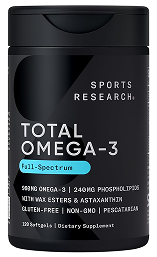
Provides a meaningful amount of EPA and DHA with 960 mg combined omega-3s per serving.
Uses multiple marine sources including Alaska pollock, wild salmon, krill, and Calanus oil.
Clearly lists its EPA and DHA amounts, making the actual omega-3 content easy to compare.
Clearly lists its EPA and DHA amounts, making the actual omega-3 content easy to compare.
A strong option for people looking for a broad-source omega-3 with transparent labeling.
Uses a two-softgel serving to provide its listed EPA and DHA amount.
Third-party tested for quality, with lot-specific testing information available to consumers.
Purified and tested with quality controls focused on contaminants, potency, and overall product quality.
Offers a well-rounded approach to omega-3 supplementation with multiple marine sources and forms.
The Bottom Line
Sports Research stood out for combining a meaningful EPA + DHA amount with a broad mix of marine omega-3 sources. Its formula uses Alaska pollock, wild salmon, krill, and Calanus oil, while clearly listing the EPA and DHA provided per serving.
The biggest consideration is serving efficiency. Its listed EPA + DHA amount comes from two softgels rather than one, which matters when comparing concentrated fish oils. Still, its transparent labeling, third-party testing, and broad marine sourcing make it a strong everyday omega-3 option.
KEY INGREDIENTS YOU WANT TO LOOK FOR:
WHAT TO LOOK FOR IN OMEGA-3 FISH OIL SUPPLEMENTS:
High EPA + DHA
Transparent Dosing
Third-Party Tested
*TheHealthSearch rankings reflect our review criteria and are provided for informational purposes only. Individual results may vary, and product details are subject to change. Please visit the product website for full details.
The 1+ Best Nose Hair Trimmers for Women
The 10 Best Strawberry Fragrance
15 Best Round Brushes For Every Type of Blowout
The 10 Best Eye Balms to Wake Up Sleepy Eyes
The 14 Best Drugstore Eye Creams, Ranked
Wear These Stylish Polish Shades All Summer
theHealthSearch Is Raising the Bar
At HG, we feature quality and well-researched health and wellness articles written only by
the industry's finest.All articles are based on the recent research findings and clinical journals to support each
topic with accurate data and information. We're working closely with doctors, researcher professionals, and health enthusiasts to check
the credibility of our chosen resources for each of our articles.